Weight Loss

Healthy Aging
& Muscle Health

Why This Matters Now

“The ‘young old’ (i.e., 60+ y) population will double by 2050 and the ‘older old’ (i.e., 80+ y) will nearly triple. (Booth, et al., 2026) As people age, maintaining strength, mobility, and independence may be some among the most important health goals older adults have.

Nutrition is an important part of that conversation.


Why Muscle Health Matters

While many people associate muscle with athletic performance, muscle health is also closely connected to everyday activities, physical function, and whole-body protein metabolism, which plays a key role in the response to stress, as well as to the development and prevention of many common pathologic conditions and chronic diseases.

Maintaining muscle health may help support:

Icons representing maintaining strength, active lifestyles, mobility, and healthy aging goals.

How Protein Needs Change With Age

Protein supports

Infographic showing how muscle health supports strength, mobility, function, and independence throughout life stages from younger adulthood to healthy aging.

Understanding Sarcopenia

“After age 60 y, the mean skeletal muscle mass loss is ~1% per year, whereas strength decreases by ~3% per year. Identifying strategies that mitigate loss of muscle, strength, and function is vital for maintaining independence and quality of life in older adulthood.” (Booth, et al., 2026) Sarcopenic muscle loss can affect:

Icons representing maintaining strength, active lifestyles, mobility, and healthy aging goals.

Helping patients understand the relationship between muscle health and physical function can create more meaningful conversations around healthy aging.


Understanding Sarcopenia & Age-Related Muscle Loss

Sarcopenia is the progressive loss of muscle mass and muscle function that can occur with aging.
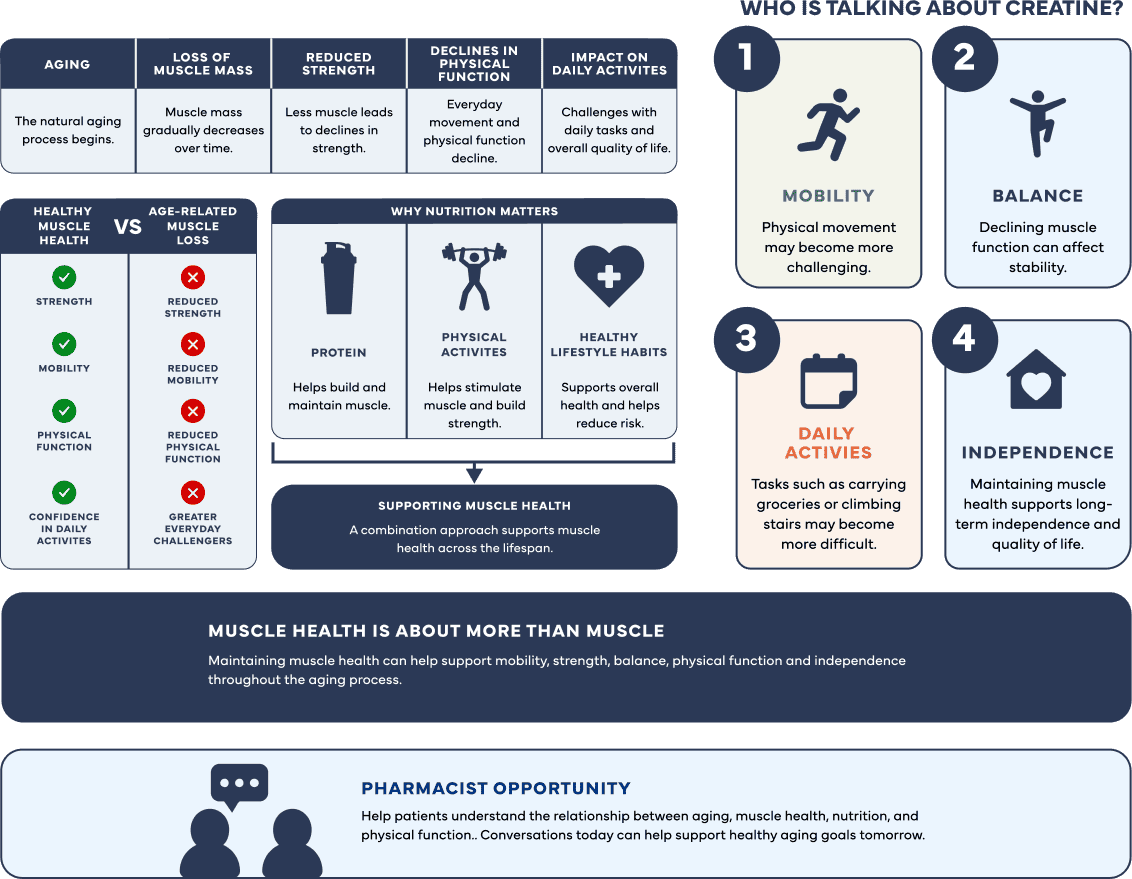
Infographic showing how aging can affect muscle mass, strength, mobility, balance, daily activities, and independence, and how nutrition, protein, physical activity, and healthy lifestyle habits help support muscle health and healthy aging.

Nutrition’s Role in Healthy Aging

Nutrition, physical activity, and healthy lifestyle habits all play important roles in supporting muscle health.

Protein provides amino acids that support the maintenance and repair of muscle tissue. Encouraging adequate protein intake of 1.2 – 1.6 g/kg/day and offering practical strategies to help achieve this intake is key for this population.

Infographic showing how consistent protein intake throughout the day provides amino acids that support muscle health, strength, mobility, and physical function.

Creatine & Healthy Aging

When paired with resistance training, creatine may help support muscle strength and physical function.
Interest in creatine continues to grow among adults focused on:

Icons illustrating maintaining strength, active lifestyles, mobility, and healthy aging goals.

Creatine conversations are expanding beyond sports performance and into healthy aging, muscle health, and maintaining physical function.
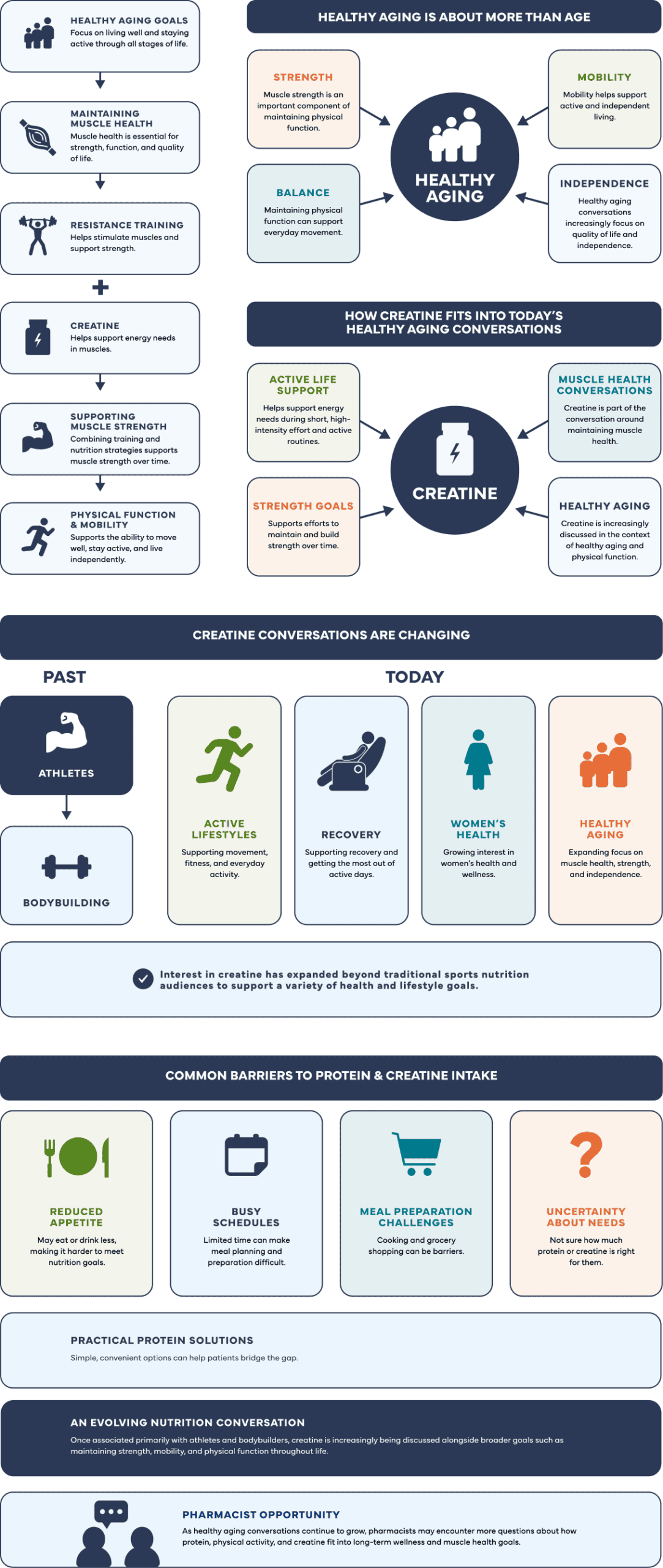
Infographic illustrating how creatine, protein, resistance training, and muscle health support healthy aging, strength, mobility, independence, and physical function, while highlighting evolving uses of creatine and common barriers to protein and creatine intake.

FAQ

Although fewer data are available for GLP-1 patients compared to other populations, protein needs vary by individual and may be influenced by factors such as activity level, age, body size, and personal goals. During weight-loss efforts, maintaining adequate protein intake at 1.2-1.6g/kg /day daily (Mozaffarian, et al. 2025) [LL1] becomes an increasingly important consideration because protein helps support muscle maintenance.

Weight loss can include losses of both fat mass and lean mass. Maintaining adequate protein intake at 1.2-1.6g/kg/day (Mozaffarian, et al., 2025) and f working with an HCP to identify other macronutrient, micronutrient and hydration goals may help individuals maintain strength, mobility, and physical function throughout their weight-loss journey.  According to Aragon (2017), a succession of meta-analyses studying weight loss participants that were not specifically using GLP-1 medications, supports the benefit of higher protein intakes for reducing body weight, fat mass, and waist circumference, and preserving lean mass in an energy deficit.

No. Interest in creatine has expanded beyond traditional sports nutrition audiences.

Nutrition can support broader healthy aging goals, including maintaining muscle health, physical function, strength, and mobility.

Nutrition Solutions for
Today’s Patient Conversations
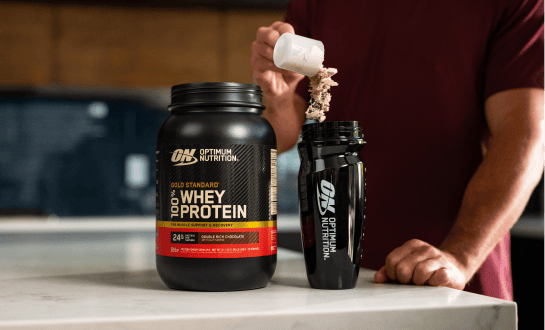
Person pouring whey protein powder from a scoop into a shaker bottle beside a container of Optimum Nutrition Gold Standard 100% Whey Protein on a kitchen countertop.
OPTIMUM NUTRITION®
World's #1 Sports Nutrition Brand¹

May be relevant when discussing:

  • Protein intake
  • Active lifestyles
  • Recovery needs
  • Creatine supplementation
  • Convenient nutrition support
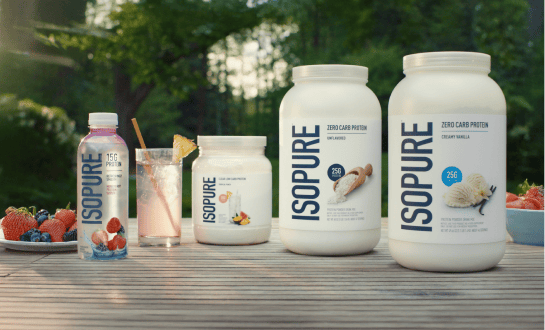
Assorted Isopure protein drinks and protein powder containers displayed outdoors with fresh berries and a prepared protein shake.
ISOPURE®
Simple, Versatile Nutrition Solutions

May be relevant when discussing:

  • Flexible protein delivery formats
  • Unflavored protein applications
  • Low-carb protein options
  • Protein plus hydration solutions
  • Everyday protein intake
¹ Optimum Nutrition is the World’s #1 Sports Nutrition brand. Source: Euromonitor International Limited; Consumer Health 2026 Edition, Sports Nutrition category, %retail value shares, 2025 data.

Interested in Bringing These Solutions Into Your Pharmacy?
Learn how OPTIMUM NUTRITION® and ISOPURE® can help support patient conversations related to:
weight management logo
Active lifestyles and recovery logo
healthy aging logo