Weight Loss

Active Lifestyles
& Recovery

Why This Matters Now

As more individuals prioritize active lifestyles, recreational fitness, and long-term wellness, pharmacists can help answer questions about recovery, protein intake, and sports nutrition products.

Understanding protein's role in exercise recovery can help you confidently answer questions and support a broader range of patients—from regular gym-goers to individuals looking to stay active and maintain consistent exercise habits.


Recovery Conversations are Evolving

HCPs know that recovery is viewed through more than the lens of competitive sports. It also includes the physiological processes of the body returning to its normal state of function after being disrupted by illness, injury, surgery, or exercise. These stressors can all induce various levels of an acute-phase response, often accompanied by fuel (glycogen) and fluid depletion, tissue (micro) trauma/ soreness, and weakness.  

Today's patients may be interested in maintaining active lifestyles, supporting exercise goals, and developing sustainable habits creating new opportunities for nutrition discussions. 


Understanding Individual Protein Needs

Health care professionals know that many factors affect protein needs.

Protein needs can vary based on:

Banner featuring five health-related icons on a light gray background. Icons represent activity level with a dumbbell, body mass with a scale, age with a group of people, goals with a flexed arm, and lifestyle with a heart containing a medical cross.

Factors That Influence Protein Needs

There is no one-size-fits-all approach to protein. Individual needs can vary based on several personal factors.
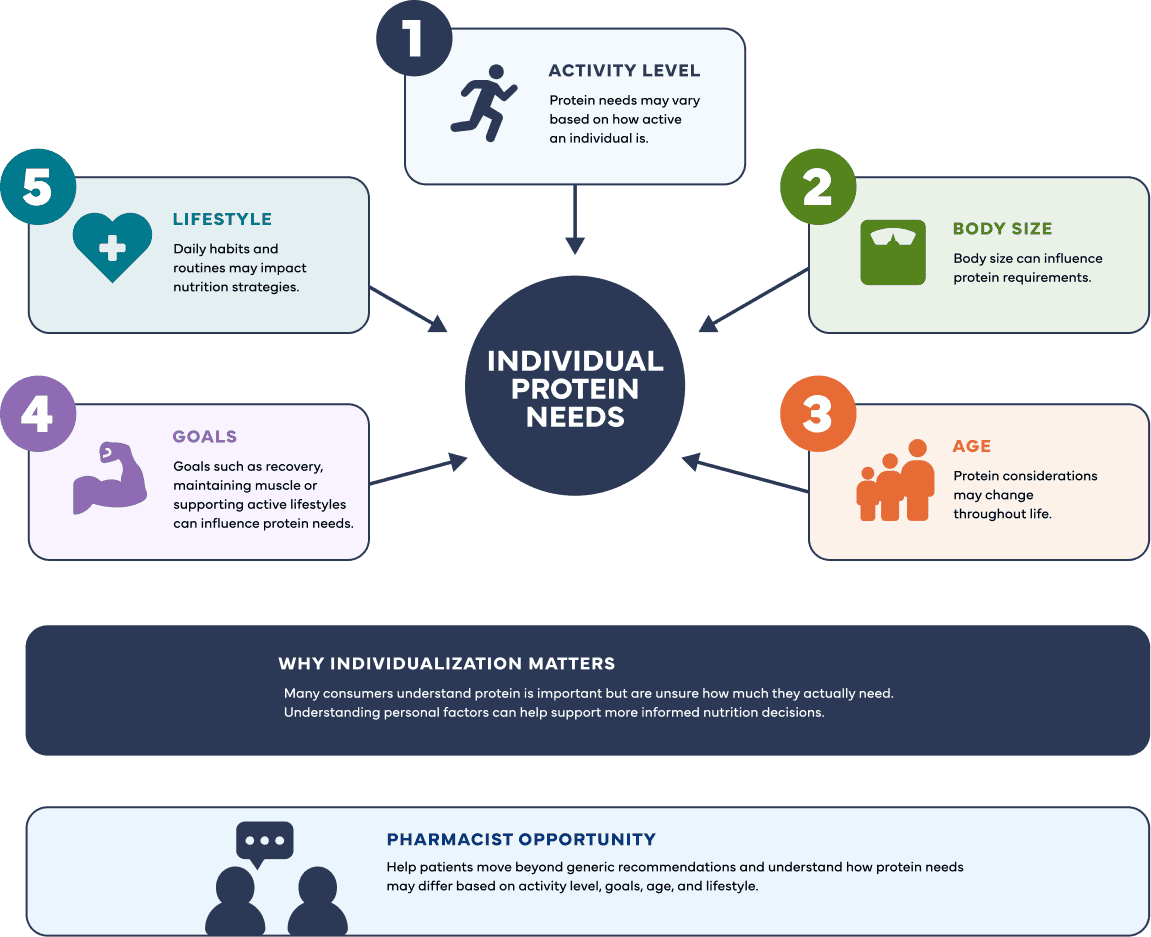
Infographic showing that protein needs vary by activity level, body size, age, goals, and lifestyle, emphasizing the importance of individualized nutrition guidance.

Protein’s Role in Recovery

Recovery is more than simply taking a day off from exercise. It requires restoring lost glycogen and fluids, repairing muscle microtrauma, returning the immune system, endocrine, and other stress markers back toward baseline, and restoring performance.

Recovery is affected by:

Icons representing key wellness factors: nutrition, hydration, sleep, and lifestyle habits.

Protein provides amino acids that support muscle repair and maintenance following exercise and remains a foundational component of many recovery-focused nutrition strategies. Its effects can be acute: Kerksick, et al (2017) stated "The addition of protein to carbohydrate has been shown to increase the speed of glycogen recovery when a short recovery window is available or if sub-optimal amounts of carbohydrate have been delivered and can also help to reduce symptoms of muscle damage."

Recovery Framework: More Than Just Rest

Recovery involves multiple lifestyle factors working together to support active lifestyles, exercise consistency, and long-term wellness.
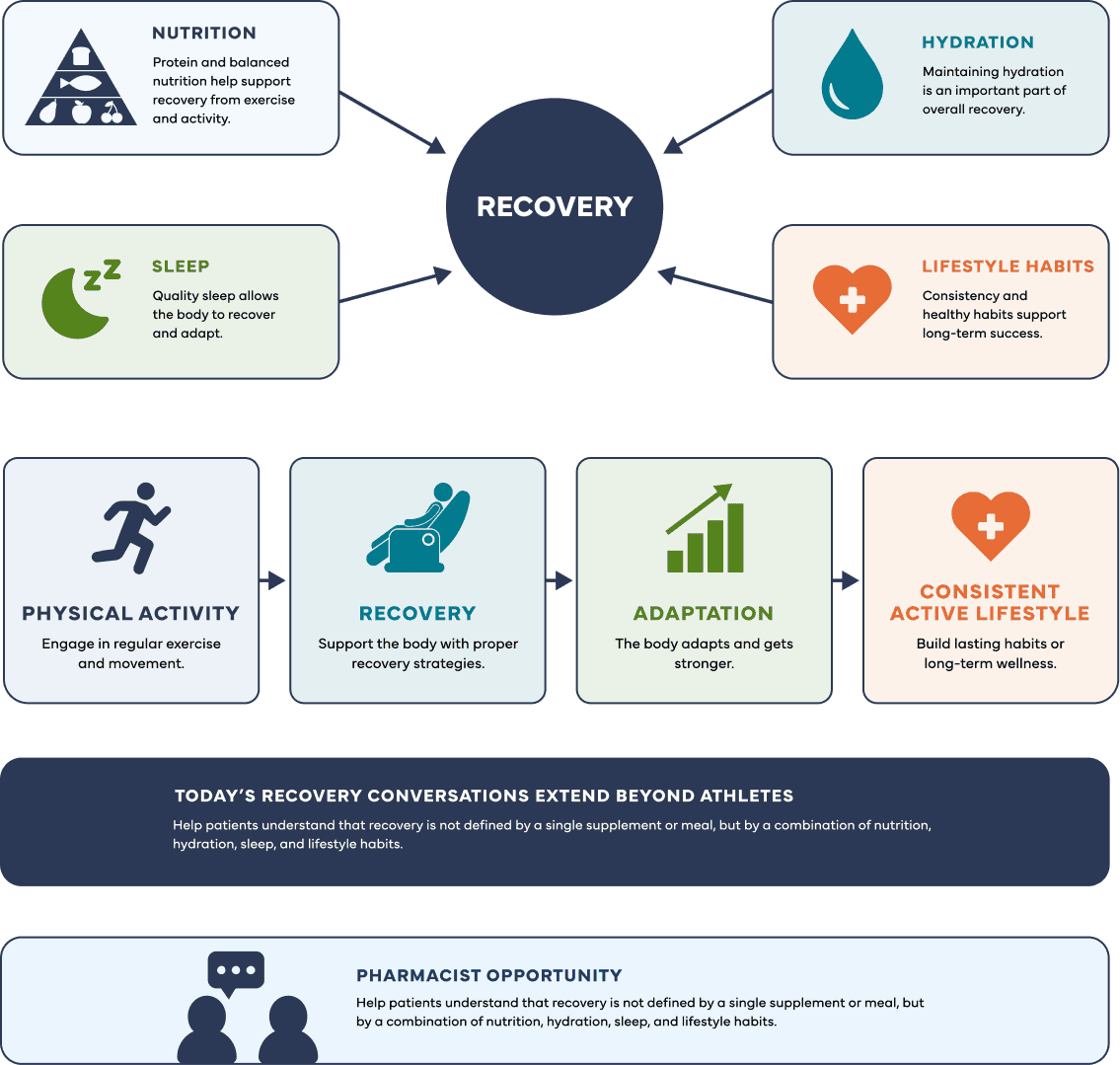
Infographic showing how nutrition, hydration, sleep, and healthy lifestyle habits support recovery, helping the body adapt, stay active, and promote long-term wellness.

Creatine is Moving Mainstream

Interest in creatine continues to grow beyond traditional sports nutrition audiences.

Creatine helps the body rapidly regenerate ATP, the immediate energy source used during short-duration, high-intensity activity.

As awareness grows, patients are exploring creatine in the context of:

Banner featuring four health and wellness benefit icons on a light gray background: a reclining figure representing recovery, a heart with a medical cross representing active lifestyles, a person icon representing women’s health, and a group of people representing healthy aging.

Creatine Explained

Understanding how creatine supports energy production during short-duration, high-intensity activity.
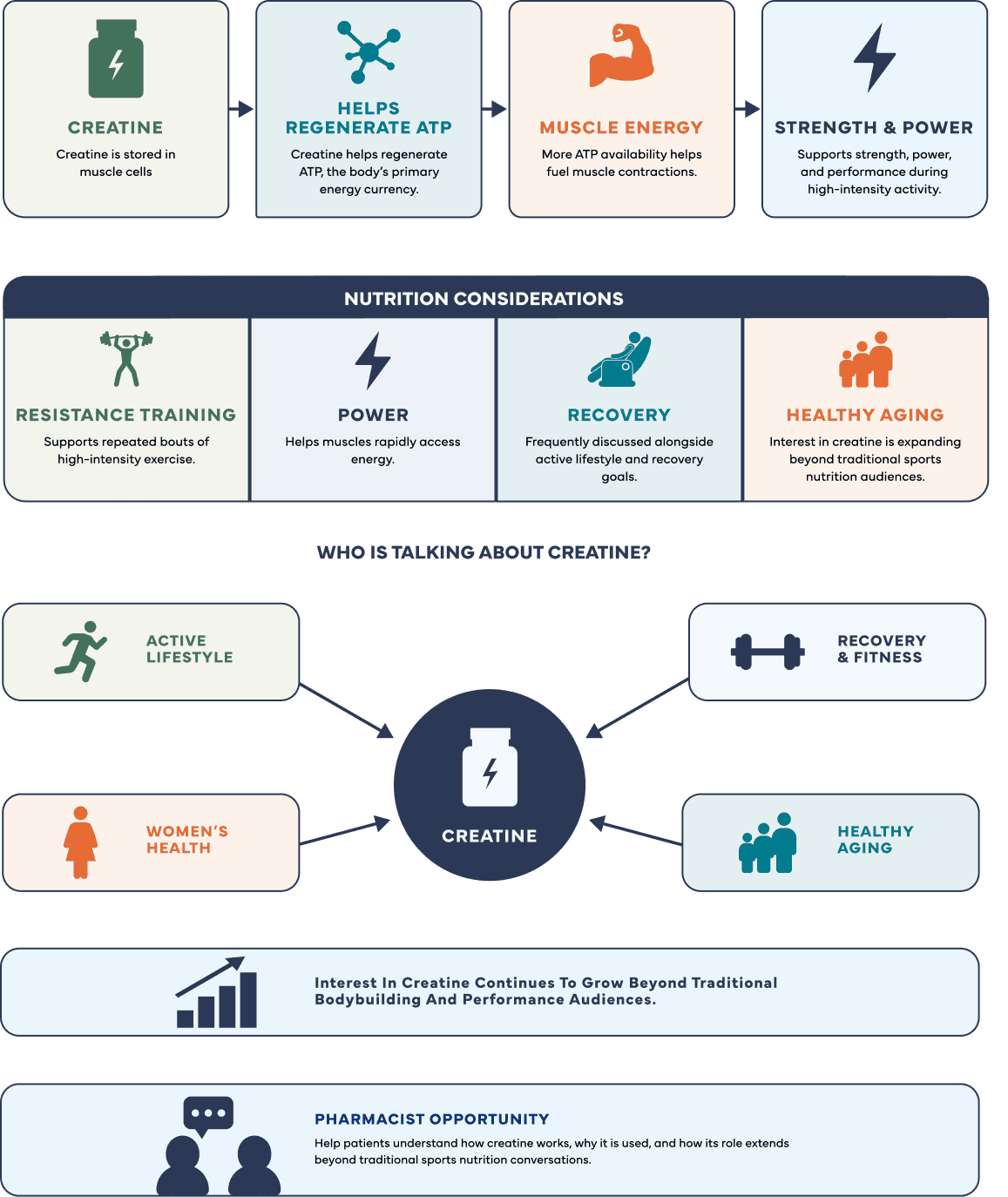
Infographic showing how creatine helps regenerate ATP to support muscle energy, strength, power, recovery, and healthy aging, with growing interest beyond traditional sports nutrition.

FAQ

Protein needs vary based on factors such as exercise type and volume, age, body mass, energy balance, and personal goals. Understanding individual needs with a physician, dietitian, or pharmacist can help  patients make more informed nutrition decisions.  

Recovery strategies differ from person to person. Protein remains an important component of many recovery-focused nutrition plans because it provides amino acids that help support muscle repair and maintenance.

Creatine is a nonessential nutrient (phosphagen), that is both created by the body and found in foods (e.g. meats). It helps the body regenerate ATP, the immediate cellular energy source that muscles use during short-duration, high-intensity activity. Creatine supplementation can provide far more of this nutrient than can be achieved realistically by the diet. Approximately 95% of the body’s bodily creatine is stored in muscle tissue. (Buford et al. 2007)

No, although seeing its benefits commonly requires exercise in the scientific literature. While creatine remains popular among athletes, interest has expanded into conversations around active lifestyles, recovery, wellness, women's health, and healthy aging.

Creatine may result in a small initial increase in water stored within muscle tissue, noticeable in as little as 4-5 days during typical 20 g / day loading regime (See below). This weight gain differs from gaining body fat.

The quickest method of increasing muscle creatine stores has been reported to be via the ingestion of ~0.3 grams/kg/day (~5 g  every 4 hours for a 70 kg [154 lb] person) of creatine monohydrate for at least 3 days followed by 3–5 g/ day thereafter to maintain elevated stores. Ingesting smaller amounts of creatine monohydrate (e.g., 2–3 g/d) will increase muscle creatine stores over a 3–4 week period. (Buford, et al. 2007)

People of all backgrounds are  exploring creatine as part of broader nutrition and wellness strategies.

There is no scientific evidence that the short- or long-term use of creatine monohydrate has any detrimental effects on otherwise healthy individuals. (Buford et al 2007)

Nutrition Solutions for
Today’s Patient Conversations
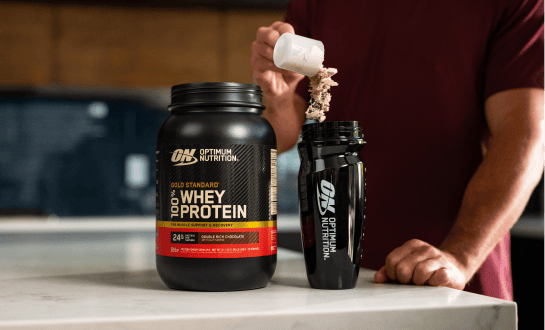
Person pouring whey protein powder from a scoop into a shaker bottle beside a container of Optimum Nutrition Gold Standard 100% Whey Protein on a kitchen countertop.
OPTIMUM NUTRITION®
World's #1 Sports Nutrition Brand1

May be relevant when discussing:

  • Protein intake
  • Active lifestyles
  • Recovery needs
  • Creatine supplementation
  • Convenient nutrition support
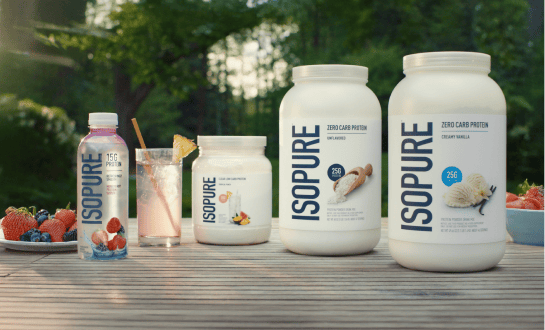
Assorted Isopure protein drinks and protein powder containers displayed outdoors with fresh berries and a prepared protein shake.
ISOPURE®
Simple, Versatile Nutrition Solutions

May be relevant when discussing:

  • Flexible protein delivery formats
  • Unflavored protein applications
  • Low-carb protein options
  • Protein plus hydration solutions
  • Everyday protein intake
1 Optimum Nutrition is the World’s #1 Sports Nutrition brand. Source: Euromonitor International Limited; Consumer Health 2026 Edition, Sports Nutrition category, %retail value shares, 2025 data.

Interested in Bringing These Solutions Into Your Pharmacy?
Learn how OPTIMUM NUTRITION® and ISOPURE® can help support patient conversations related to:
weight management logo
Active lifestyles and recovery logo
healthy aging logo