Active Lifestyles
& Recovery
Why This Matters Now
As more individuals prioritize active lifestyles, recreational fitness, and long-term wellness, pharmacists can help answer questions about recovery, protein intake, and sports nutrition products.
Understanding protein's role in exercise recovery can help you confidently answer questions and support a broader range of patients—from regular gym-goers to individuals looking to stay active and maintain consistent exercise habits.
Recovery Conversations are Evolving
HCPs know that recovery is viewed through more than the lens of competitive sports. It also includes the physiological processes of the body returning to its normal state of function after being disrupted by illness, injury, surgery, or exercise. These stressors can all induce various levels of an acute-phase response, often accompanied by fuel (glycogen) and fluid depletion, tissue (micro) trauma/ soreness, and weakness.
Today's patients may be interested in maintaining active lifestyles, supporting exercise goals, and developing sustainable habits creating new opportunities for nutrition discussions.
Understanding Individual Protein Needs
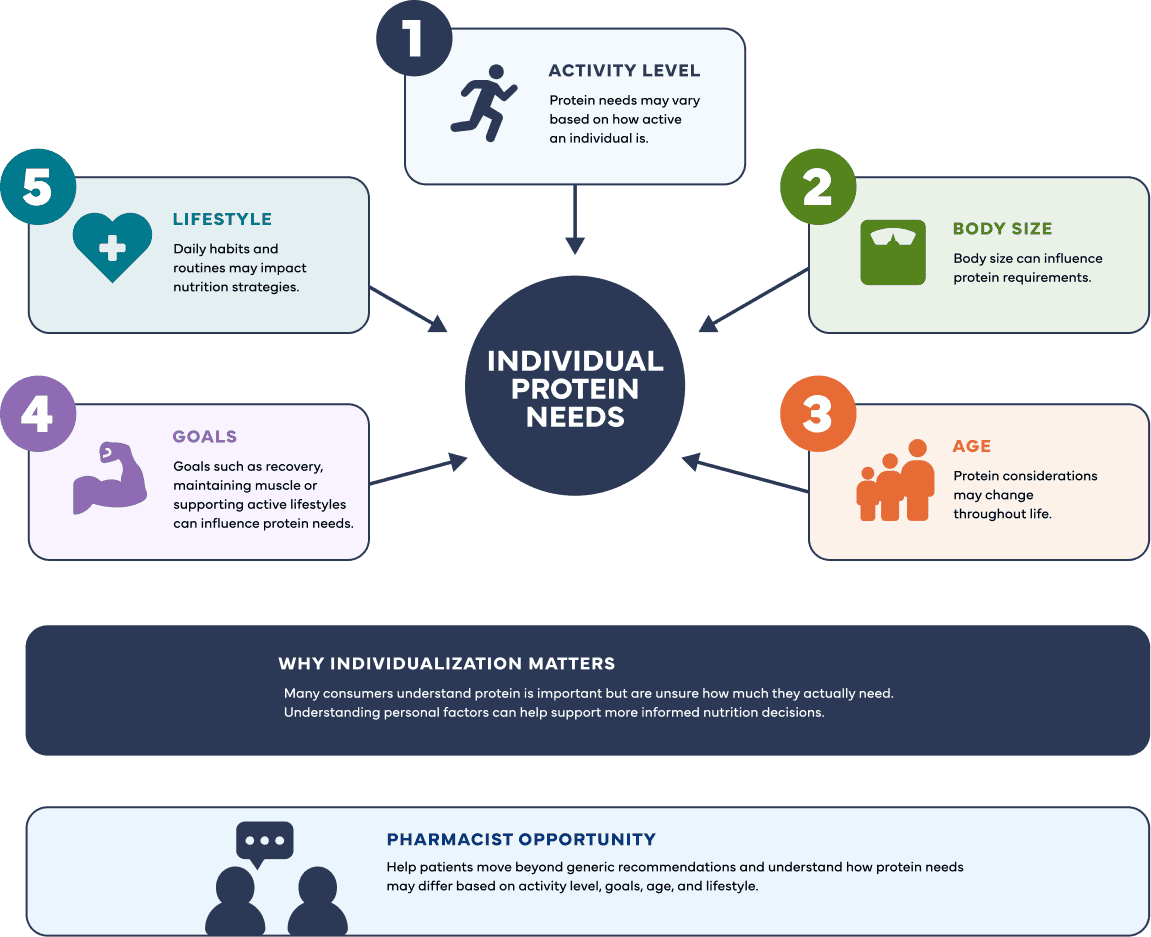
Health care professionals know that many factors affect protein needs.
Protein needs can vary based on:

Factors That Influence Protein Needs
There is no one-size-fits-all approach to protein. Individual needs can vary based on several personal factors.
Protein’s Role in Recovery
Recovery is more than simply taking a day off from exercise. It requires restoring lost glycogen and fluids, repairing muscle microtrauma, returning the immune system, endocrine, and other stress markers back toward baseline, and restoring performance.
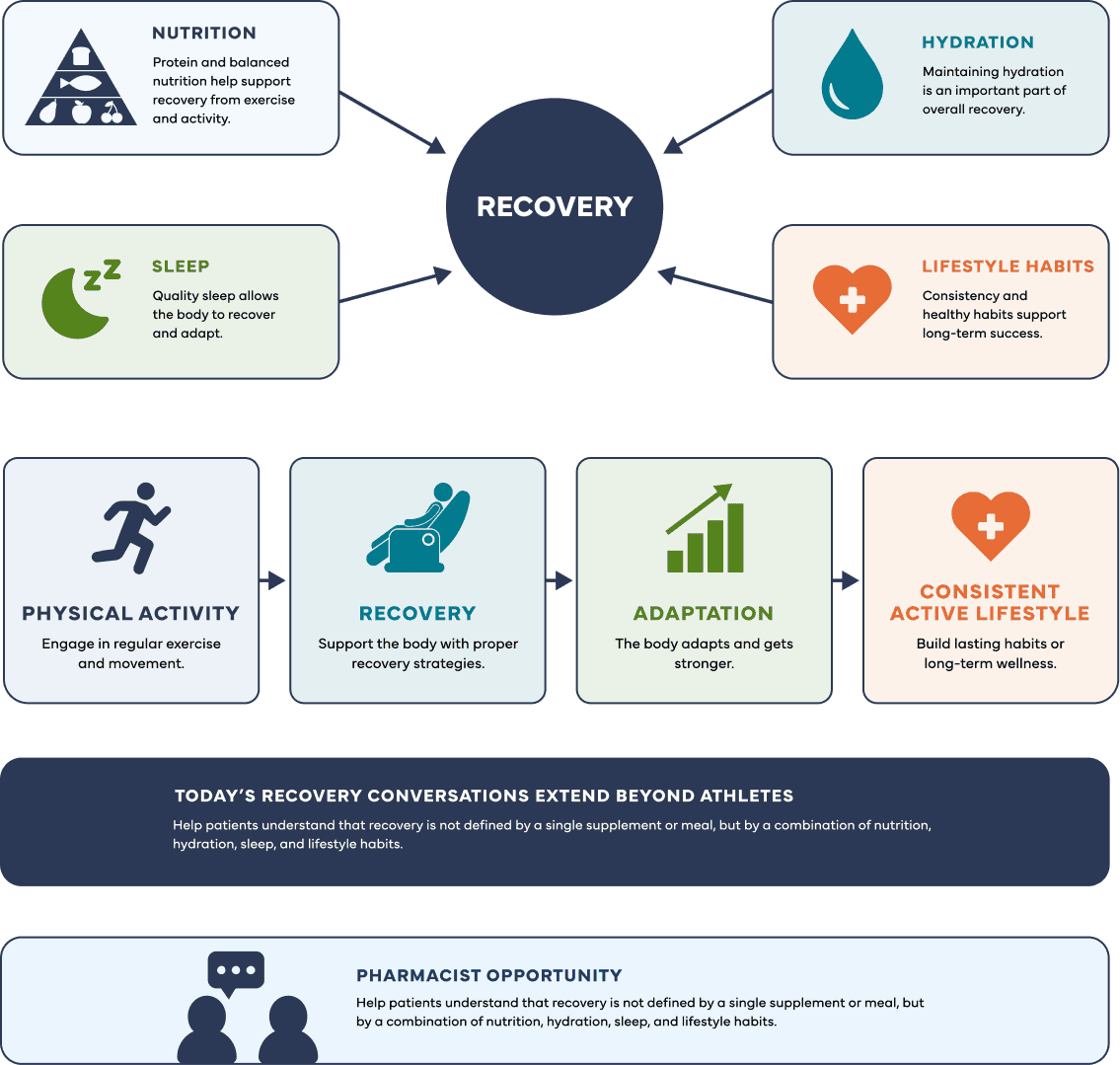
Recovery is affected by:

Protein provides amino acids that support muscle repair and maintenance following exercise and remains a foundational component of many recovery-focused nutrition strategies. Its effects can be acute: Kerksick, et al (2017) stated "The addition of protein to carbohydrate has been shown to increase the speed of glycogen recovery when a short recovery window is available or if sub-optimal amounts of carbohydrate have been delivered and can also help to reduce symptoms of muscle damage."
Recovery Framework: More Than Just Rest
Recovery involves multiple lifestyle factors working together to support active lifestyles, exercise consistency, and long-term wellness.
Creatine is Moving Mainstream
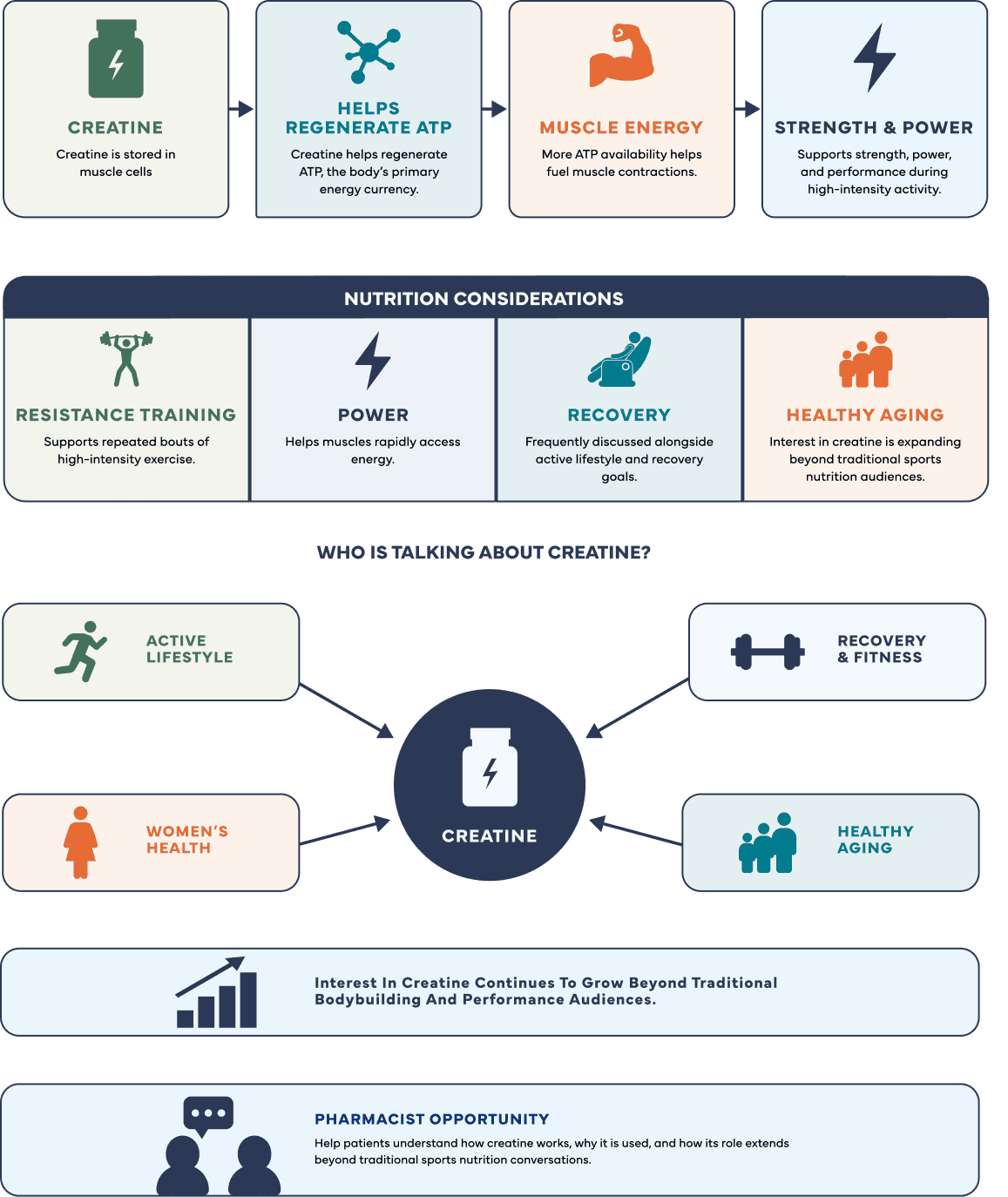
Interest in creatine continues to grow beyond traditional sports nutrition audiences.
Creatine helps the body rapidly regenerate ATP, the immediate energy source used during short-duration, high-intensity activity.
As awareness grows, patients are exploring creatine in the context of:

Creatine Explained
Understanding how creatine supports energy production during short-duration, high-intensity activity.
FAQ
Nutrition Solutions for
Today’s Patient Conversations
May be relevant when discussing:
- Protein intake
- Active lifestyles
- Recovery needs
- Creatine supplementation
- Convenient nutrition support

May be relevant when discussing:
- Flexible protein delivery formats
- Unflavored protein applications
- Low-carb protein options
- Protein plus hydration solutions
- Everyday protein intake
Interested in Bringing These Solutions Into Your Pharmacy?